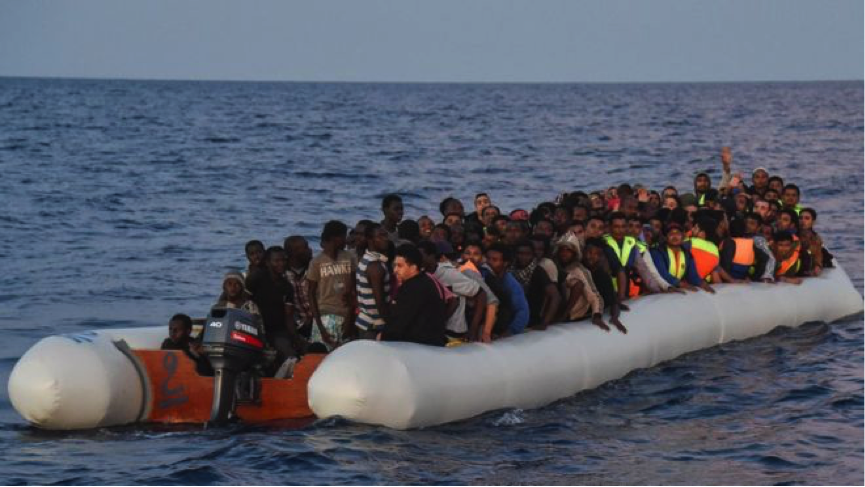
Death, torture and inhuman living conditions; Words placed on constant repeat as international human rights violations once again, slides its way back into the European media sphere. You guessed it, its time to talk about migration.
First, the reports
Beginning September this year the United Nations Security Council (UNSC), The Danish Refugee Council (DFC),Medecins Sans Frontieres (MSF), OXFAMand Amnesty International (just to name a few) all released reports commenting on the inhumane conditions of Libyan detention facilities. All of the reports refer to failure of Human Rights protection and call for a renewed humane migration policy approach that focuses on migrant protection and the creation of safe legal routes.
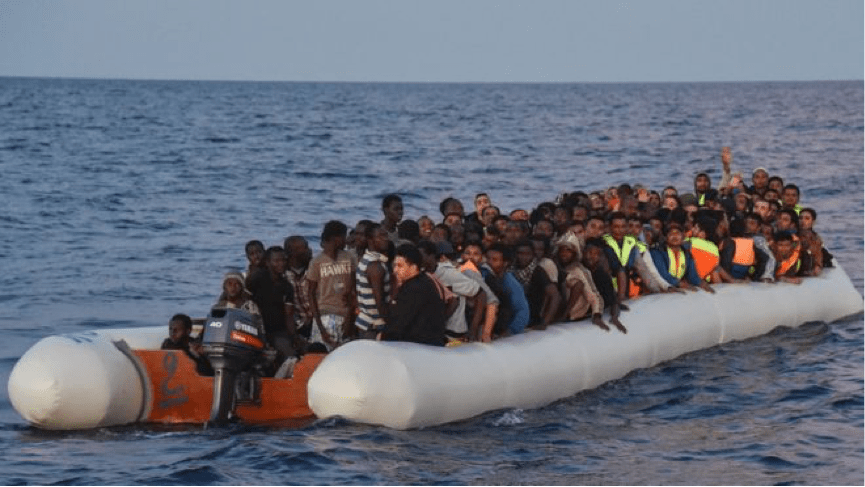
The reports sailed in after the Libyan Coast Guard cracked down on boats leaving Libyan shores creating a consequent surge in migration flowsbetween the Gulf of Tunis and Sicily. Thisraised concern over the overcrowded detention centres, which the reports also claim to be a result of the European Union migration ‘hotspot’ strategy.
Amnesty International described the current hotspot approach as a “reckless European strategy, whose centerpiece is cooperation with the Libyan coastguard, is exposing refugees and migrants to even greater risks at sea and when intercepted to disembarkation in Libya, where they face horrific conditions and violations in detention, torture and rape”.
The UN high commissioner for human rights, Zeid Ra’ad Al Hussein called it a“lack of systematically integrated human rights monitoring and reporting mechanisms by the Libyan Coastguard and other State actors dealing with migrants and refugees”.
It’s fair to assume these reports areset out to trigger global audiences and enhance discussion about the correlating issues of irregular migration with the goal to push for an effective remedy. Different NGO’s and media outlets have placed blame on policymakers, political discourse and the EU’s failure to address the violations directly rather than sticking to the current strategy of providing externalised aid.
The recommendation pushed for by criticsis an established uniformed migration policy that is upheld by all member states. Regional Director for the International Organisation of Migration (IOM), Eugenio Ambrosi condemned the EU’s inability to acknowledge the need for an effective collective policy thus far stating,
“First of all a union has to have a common policy on migration as well as on asylum. I mean we have a common policy (and this is not a joke), a common standard, which all countries have to strictly abide to other wise there are penalties, on the size of clams and we don’t have a common policy on what to do with human beings looking for an alternative in Europe?”
Amongst the criticisms one must look at the feasibility of reaching a long-term policy solution whilst monitoring the application of fundamental Human Rights. Yes, you have the core EU idea of solidarity and the responsibility to protect rights of migrants alongside the need to promote cooperation between member states but if it was that simple, the crisis would have already been solved, right?
The current approach
To decipher who really is to blame for what is only being described as outrageous neglect, one has to evaluate the present strategy. The current policyis aimed at stronger management of external borders through the creation of hotspots in Greece and Italy. This type of strategy relies on cooperation of EU member states towards a relocation programme that deals with the heavy influx of these two hotspots.
In light of the previously mentioned reports it’s safe to say that many criticise this hotspot approach and argue that their creation has only lent a helping hand to human smugglers and made the trafficking business a more attractive method of transport to Europe compared to the insufferable alternatives. Secretary General of the European Council on Refugees and Exiles Catherine Woollard labelled hotspots as “a tool that can be used for good or for ill”.
The Commission has rejected claims that they are buying into an inhumane system through their cooperation with the Libyan Coast Guard and released a statement in September announcing their intention to spend182 million euros to protect “vulnerable migrants in Libya, notably at disembarkation points and in detention centres with a view of providing economic alternatives to trafficking and smuggling activities.”
The EU Delivering on Migration report released earlier this year highlights the efforts and successes of the current relocation strategy and includes a declaration of funds delivered to emergency assist areas surrounding the hotspots. It also states a dramatic decline in crossings between Turkey and Greece since the EU-Turkey Statement was implemented.
Contrariwise, The Danish Refugee Council criticised the approach declaring that the policy failure is caused by “insufficient relocation pledges from member states and the limited number of nationalities eligible for relocation,” explaining that a decline in crossings constitutes a change in routes rather than numbers.
FRONTEX spokesperson Ms Izabella Cooper explained the shift in member state cooperation regarding the emergency assist operations surrounding the hotspots.
“This is a system that used to be absolutely voluntary up until last year and of course that made it very difficult for us to provide sufficient assistance to countries because the EU member states (Austria, Germany, Sweden) were struggling themselves with the migratory pressure and many of the migrants had not been registered before. Now these countries have arranged border controls in order to face these emergencies. FRONTEX was given a new mandate which included quotas of border and coast guard officers, which every European country is obliged to provide in case of emergency”.
The report also included a small statement regarding infringement procedures launched against Poland, Hungary and the Czech Republic due to their failure to comply with the relocation and resettlement programs but admitted there was no judicial procedure established yet to complete the process.
What could be seen as a major step forward is the Commission’s recognition of the enormous need to reform the Dublin regulation through an attempt to implement a ‘permanent crisis relocation mechanism’ otherwise known as the corrective mechanism.
For those who are unaware of the Dublin regulation, in short, it forbids one member state from returning irregular migrants back to where they came from thus prohibiting member states from violating Article 3 of the European Convention for the Protection of Human Rights and Fundamental Freedoms (ECHR). You may have previously heard this concept as the principle of non-refoulment.
Critics consider the current EU method of apprehending migrants at sea and then returning them to Libyan shores in order to prevent arrival in Europe, a direct breach of this principle.
The proposed corrective mechanism is therefore aimed at relieving hotspot areas by ensuring the concept of burden sharing across member states including recognition of disproportionate numbers of asylum-seekers and the penalisation of those who decide to not accept the allocation of asylum-seekers from other member states under pressure. Failure to oblige would result in a ‘solidarity contribution’ of€250 000 per applicant however the Member States will still retain the right to refuse to relocate migrants in relation to national security and public order concerns.
The problem is that the distribution mechanism is based on a voluntary system, which already existed in the old Dublin regulation, and failed. Mr Ambrosi states that the new proposal is both a hopeful and unpredictable approach due to the past and present political discourse regarding burden sharing.
“If you commit to be part of the European Union, which is treaty-based, according to the ECHR all member states carry an obligation to uphold and to react against violation of these fundamental rights anywhere they happen not just within the territory of the EU. You can’t sign up to be a part of this principle and then pick and choose when to apply them. You cant be a part of a tennis club and then decide which month you pay your membership”, he said.
The current increased flow has shown is that the policy and the Dublin mechanism currently used to deal with migrant and asylum seeker flow is outdated cannot work in the current context with the level of migrant influx.
To the future and beyond?
Its one thing to critique the current policy, another to reinvent it in such a way that it suits all parties involved. Member states will have to decide as a union how to utilize their political and financial leverage. They must make a political choice on whether to prioritise resources on monitoring and protecting the rights of the migrants (pleasing the NGO’s) or prioritise resources on securitization of borders and combatting human trafficking (pleasing the public opinion) or prioritise the production of a fast, efficient and non-bureaucratic legal channel including an effective processing/identification system (pleasing the migrants). It is unrealistic to consider all three options possible at one time.
Ironically, within this on-going debate there lies in the fact that despite possible failure to meet Human Rights requirements through the hotspot approach, Europe still needs migrants. Mr Ambrosi states thatEurope’s current demographic curve connecting to the economic, social and pension systems will simply not be sustainable without a continuation of migration.
“At a certain point we [the Europe system] will be forced. No matter how active we get were not going to bridge the demographic gap and at a certain point we will be forced. Now the challenge is to put together this type of system now rather than when the contingency and the pressure of the moment will force us”, he said.


